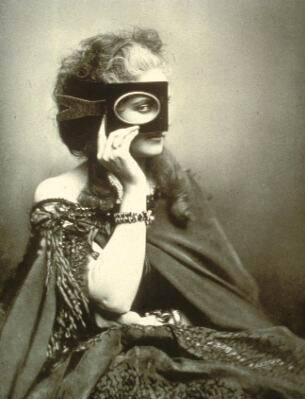
 Virginia Oldoini, Countess di Castiglione (22 March 1837 – 28 November 1899), better known as La Castiglione, was an Italian courtesan who achieved notoriety as a mistress of Emperor Napoleon III of France]. She was also a significant figure in the early history of photography.
![Virginia Oldoini, Countess di Castiglione (22 March 1837 – 28 November 1899), better known as La Castiglione, was an Italian courtesan who achieved notoriety as a mistress of Emperor Napoleon III of France]. She was also a significant figure in the early history of photography.
Born Virginia Elisabetta Luisa Carlotta Antonietta Teresa Maria Oldoïni, (French: Virginie Élisabeth Louise Charlotte Antoinette Thérèse Marie Oldoïni) on 22 March 1837 in Florence, Tuscany to Marquis Filippo Oldoini and Marquise Isabella Lamporecchi, members of the minor Tuscan nobility, she was often known by her nickname of “Nicchia”. She married Francesco Verasis, conte di Castiglione, at the age of 17. He was twelve years her senior. They had a son, Giorgio.
Her cousin, Camillo, conte di Cavour, was a minister to Victor Emmanuel II, king of Sardinia, Piedmont and Savoy. When the Count and Countess traveled to Paris in 1855, the Countess was under her cousin’s instructions to plead the cause of Italian unity with Napoleon III of France. She achieved notoriety by becoming Napoleon III’s mistress, a scandal that led her husband to demand a marital separation. During her relationship with the French emperor in 1856 and 1857, she entered the social circle of European royalty. She met Augusta of Saxe-Weimar, Otto von Bismarck and Adolphe Thiers, among others.
The Countess was known for her beauty and her flamboyant entrances in elaborate dress at the imperial court. One of her most infamous outfits was a “Queen of Hearts” costume. George Frederic Watts painted her portrait in 1857. She was described as having long, wavy blonde hair, pale skin, a delicate oval face, and eyes that constantly changed colour from green to an extraordinary blue-violet.
The Countess returned to Italy in 1857 when her affair with Napoleon III was over. Four years later, the Kingdom of Italy was proclaimed, conceivably in part due to the influence that the Countess had exerted on Napoleon III. That same year, she returned to France and settled in Passy.
In 1871, just after the defeat of France in the Franco-Prussian War, she was called to a secret meeting with Otto von Bismarck to explain to him how the German occupation of Paris could be fatal to his interests. She may have been persuasive, as Paris was spared Prussian occupation.
In 1856 she began sitting for Mayer and Pierson, photographers favored by the imperial court. Over the next four decades she directed Pierre-Louis Pierson to help her create 700 different photographs in which she re-created the signature moments of her life for the camera. She spent a large part of her personal fortune and even went into debt to execute this project. Most of the photographs depict the Countess in her theatrical outfits, such as the Queen of Hearts dress. A number of photographs depict her in poses risqué for the era — notably, images that expose her bare legs and feet. In these photos, her head is cropped out.
Robert de Montesquiou, a Symbolist poet, dandy, and avid art collector, was fascinated by the Countess di Castiglione. He spent thirteen years writing a biography, La Divine Comtesse, which appeared in 1913. After her death, he collected 433 of her photographs, all of which entered the collection of the Metropolitan Museum of Art.
Virginia spent her declining years in an apartment in the Place Vendôme, where she had the rooms decorated in funereal black, the blinds kept drawn, and mirrors banished—apparently so she would not have to confront her advancing age and loss of beauty. She would only leave the apartment at night. In the 1890s she began a brief collaboration with Pierson again, though her later photographs clearly show her loss of any critical judgement, possible due to her growing mental instability. She wished to set up an exhibit of her photographs at the Exposition Universelle (1900), though this did not happen. On November 28, 1899, she died at age sixty-two, and was buried at the Père Lachaise Cemetery in Paris.
Source](http://30.media.tumblr.com/tumblr_l6960p1Iyc1qbl4ppo1_500.jpg)
Born Virginia Elisabetta Luisa Carlotta Antonietta Teresa Maria Oldoïni, (French: Virginie Élisabeth Louise Charlotte Antoinette Thérèse Marie Oldoïni) on 22 March 1837 in Florence, Tuscany to Marquis Filippo Oldoini and Marquise Isabella Lamporecchi, members of the minor Tuscan nobility, she was often known by her nickname of “Nicchia”. She married Francesco Verasis, conte di Castiglione, at the age of 17. He was twelve years her senior. They had a son, Giorgio.
Her cousin, Camillo, conte di Cavour, w as a minister to Victor Emmanuel II, king of Sardinia, Piedmont and Savoy. When the Count and Countess traveled to Paris in 1855, the Countess was under her cousin’s instructions to plead the cause of Italian unity with Napoleon III of France.
She achieved notoriety by becoming Napoleon III’s mistress, a scandal that led her husband to demand a marital separation. During her relationship with the French emperor in 1856 and 1857, she entered the social circle of European royalty. She met Augusta of Saxe-Weimar, Otto von Bismarck
 and Adolphe Thiers,
  among others.The Countess was known for her beauty and her flamboyant entrances in elaborate dress at the imperial court. One of her most infamous outfits was a “Queen of Hearts” costume. George Frederic Watts painted her portrait in 1857. She was described as having long, wavy blonde hair, pale skin, a delicate oval face, and eyes that constantly changed colour from green to an extraordinary blue-violet.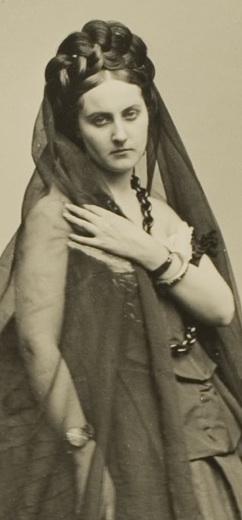
as a minister to Victor Emmanuel II, king of Sardinia, Piedmont and Savoy. When the Count and Countess traveled to Paris in 1855, the Countess was under her cousin’s instructions to plead the cause of Italian unity with Napoleon III of France.She achieved notoriety by becoming Napoleon III’s mistress, a scandal that led her husband to demand a marital separation. During her relationship with the French emperor in 1856 and 1857, she entered the social circle of European royalty. She met Augusta of Saxe-Weimar,
Otto von Bismarck and Adolphe Thiers, among others.The Countess was known for her beauty and her flamboyant entrances in elaborate dress at the imperial court. One of her most infamous outfits was a “Queen of Hearts” costume. George Frederic Watts painted her portrait in 1857. She was described as having long, wavy blonde hair, pale skin, a delicate oval face, and eyes that constantly changed colour from green to an extraordinary blue-violet.The Countess returned to Italy in 1857 when her affair with Napoleon III was over. Four years later, the Kingdom of Italy was proclaimed, conceivably in part due to the influence that the Countess had exerted on Napoleon III. That same year, she returned to France and settled in Passy.
In 1871, just after the defeat of France in the Franco-Prussian War, she was called to a secret meeting with Otto von Bismarck to explain to him how the German occupation of Paris could be fatal to his interests. She may have been persuasive, as Paris was spared Prussian occupation.
In 1856 she began sitting for Mayer and Pierson, photographers favored by the imperial court. Over the next four decades she directed Pierre-Louis Pierson to help her create 700 different photographs in which she re-created the signature moments of her life for the camera. She spent a large part of her personal fortune and even went into debt to execute this project. Most of the photographs depict the Countess in her theatrical outfits, such as the Queen of Hearts dress. A number of photographs depict her in poses risqué for the era — notably, images that expose her bare legs and feet. In these photos, her head is cropped out.
Robert de Montesquiou, a Symbolist poet, dandy, and avid art collector, was fascinated by the Countess di Castiglione. He spent thirteen years writing a biography, La Divine Comtesse, which appeared in 1913. After her death, he collected 433 of her photographs, all of which entered the collection of the Metropolitan Museum of Art.
Virginia spent her declining years in an apartment in the Place Vendôme,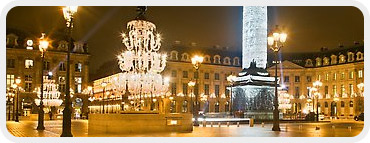 where she had the rooms decorated in funereal black, the blinds kept drawn, and mirrors banished—apparently so she would not have to confront her advancing age and loss of beauty. She would only leave the apartment at night. In the 1890s she began a brief collaboration with Pierson again, though her later photographs clearly show her loss of any critical judgement, possible due to her growing mental instability. She wished to set up an exhibit of her photographs at the Exposition Universelle (1900), though this did not happen. On November 28, 1899, she died at age sixty-two, and was buried at the Père Lachaise Cemetery in Paris.
where she had the rooms decorated in funereal black, the blinds kept drawn, and mirrors banished—apparently so she would not have to confront her advancing age and loss of beauty. She would only leave the apartment at night. In the 1890s she began a brief collaboration with Pierson again, though her later photographs clearly show her loss of any critical judgement, possible due to her growing mental instability. She wished to set up an exhibit of her photographs at the Exposition Universelle (1900), though this did not happen. On November 28, 1899, she died at age sixty-two, and was buried at the Père Lachaise Cemetery in Paris.




 flat
flat  sella
sella lanza
lanza

 turr
turr gra velotte today
 Prince Napoleon was despatched from the camp at Châlons to see what he could do. At this eleventh hour (19th August) Napoleon was ready to yield about Rome. At the camp, the influence which guided him in Paris was less felt, or it is probable that he would not have yielded even now. Prince Napoleon carried a sheet of white paper with the Emperor's signature at the foot. He showed it to Lanza when he reached Florence, and told him to fill it up as he chose. Whatever he asked for was already granted. A month before, such terms would have won both Italy and Austria—not now.